
Recent Works
Below is listed an on-line GALLERY highlighting a selection of intaglio etching, drawings and paintings created from 2014 to the present. In this column, works that have been created in the past year are highlighted. Many of these works employ a number of processes which I feel are a blending of time honored intaglio and woodblock processes. All works are original prints executed by the artist/printmaker Craig Fisher in the intaglio print shop of Ibis Press Studio™. Most print pieces show were printed in editions under 15.
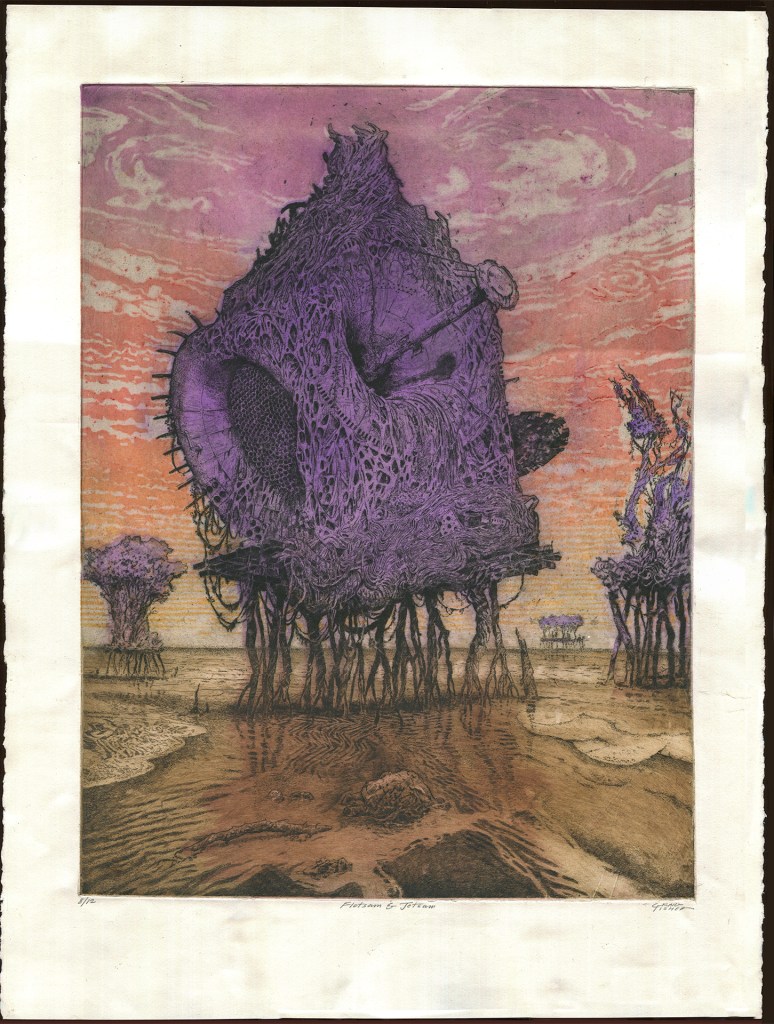
Flotsam and Jetsam • aquatint etching• 24″ x 36″ with Japanese woodblock, chine collé• Edition of 12 • 2024
© 2023, All Rights Reserved, Craig V Fisher
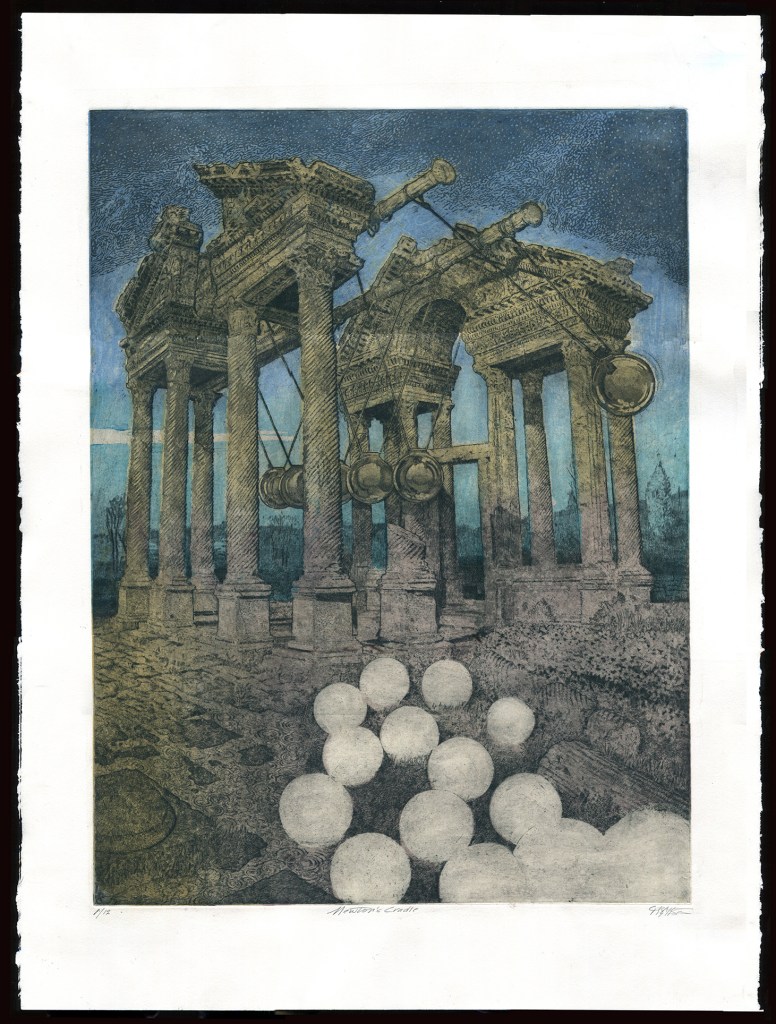
Newton’s Cradle • aquatint etching• 24″ x 36″ with Japanese woodblock, chine collé• Edition of 12 • 2024
© 2024, All Rights Reserved, Craig V Fisher

Verdant Vestments • 2 color aquatint etching• 24″ x 36″• Edition of 14 • 2024
© 2023, All Rights Reserved, Craig V Fisher

Dance of the Sibyls • 2 color aquatint etching• 12″ x 18″• Edition of 13 • 2023
© 2023, All Rights Reserved, Craig V Fisher

Tympanum •Colored aquatint etching• 18″ x 24″• Edition of 10 • 2023
© 2023, All Rights Reserved, Craig V Fisher
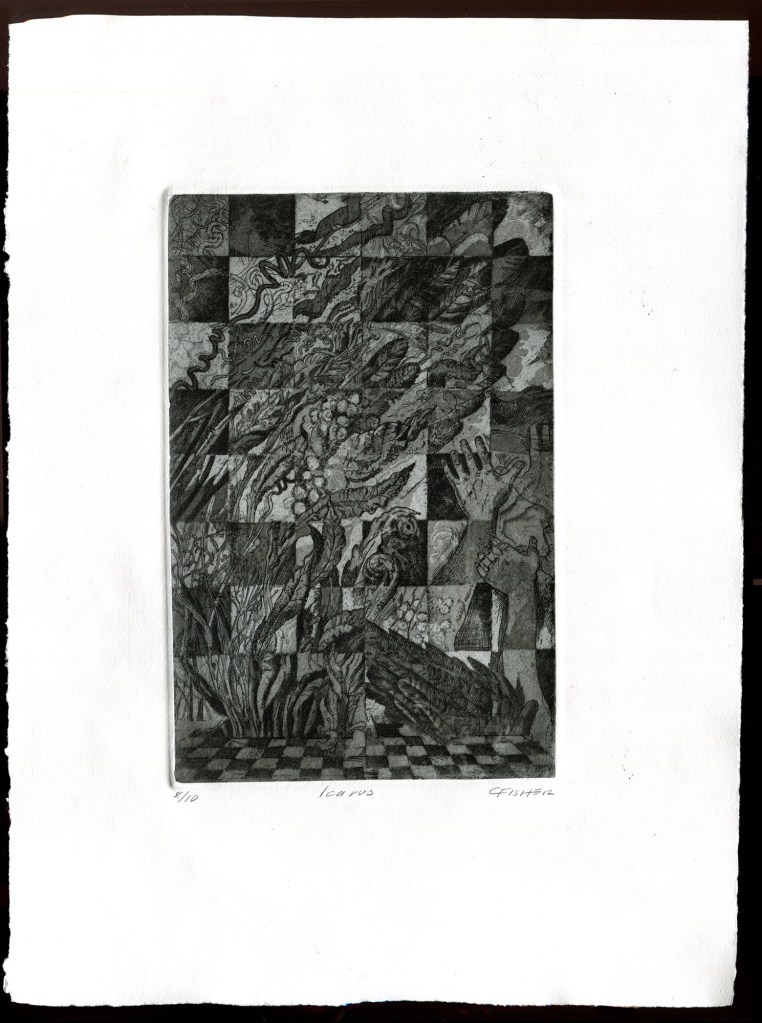
Icarus • aquatint etching chine collé• 6″ x 9″• Edition of 10 • 2023
© 2023, All Rights Reserved, Craig V Fisher
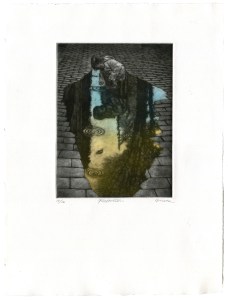
Reflections • tinted mezzotint• 6″ x 9″• Edition of 16 • 2023
© 2023, All Rights Reserved, Craig V Fisher
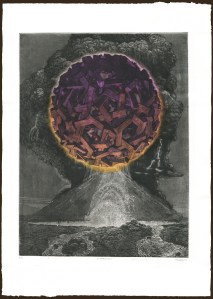
Cotopaxi • Aquatint etching with colored Woodblock elements (chine collé)• 18″ x 24″• Edition of 9 • 2022 *
© 2022, All Rights Reserved, Craig V Fisher

Heisenberg Cut• aquatint etching over woodblock color (chine collé) • 18″ x 24″• Edition of 12 • 2022 *
© 2022, All Rights Reserved, Craig V Fisher

Azure Sentinel• aquatint etching over woodblock color (chine collé) • 18″ x 24″• Edition of 12 • 2022 *
© 2022, All Rights Reserved, Craig V Fisher
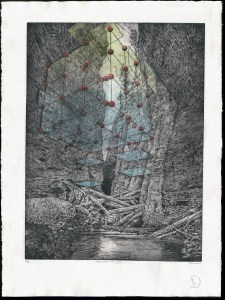
Pale Blue Passage • Aquatint etching with colored Woodblock elements (chine collé)• 18″ x 24″• Edition of 8 • 2022 *
© 2022, All Rights Reserved, Craig V Fisher
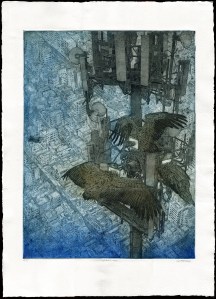
Carrion • Colored Intaglio • 18″ x 24″• Edition of 5 • 2021 *
© 2021, All Rights Reserved, Craig V Fisher
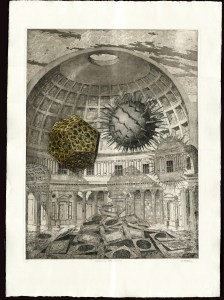
Chasing the Oculus • Colored Intaglio • 18″ x 24″• Edition of 5 • 2021
© 2021, All Rights Reserved, Craig V Fisher
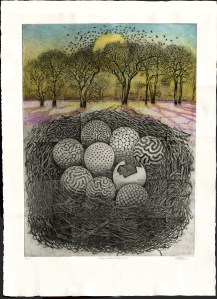
Migratory Patterns II •Intaglio with aquatint
and chine collé color created using Japanese Woodblock
• edition of 8 • 2017
© 2021, All Rights Reserved, Craig V Fisher
 Ibis Press Studio